From Trauma to Transformation: How Coach Michael Ogden Turned His Greatest Pain Into His Superpower
A Transformational Conversation with Coach Michael Ogden
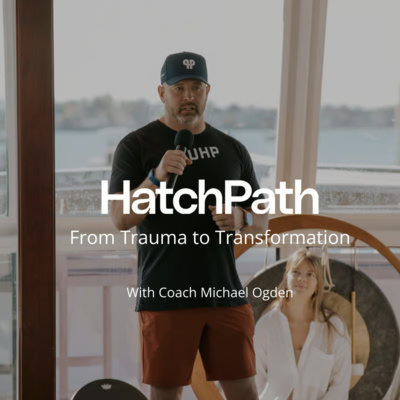
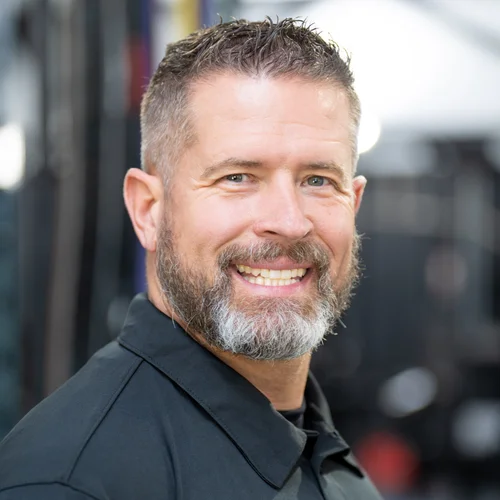
Michael Ogden
Certified Integrative Health Coach · Former Army Officer · MBA · Trauma-Informed Coach
🎙️ Listen to the Full Episode
What if the hardest thing you've ever been through turned out to be your greatest asset? Coach Michael Ogden is a former Army Officer, MBA, certified personal trainer, and trauma-informed integrative health coach. But the credential that matters most in his story is one that doesn't appear on any resume — he has walked through his own fire. Combat trauma. Suicidal ideation. A period of complete disconnection from himself. And on the other side of all of it, he found something he now calls his superpower: empathy so deep it transforms the people he coaches.
Joy vs. Happiness — Why the Distinction Matters
One of the most striking threads of this conversation is Michael's distinction between joy and happiness. Most people use these words interchangeably. Michael is precise: happiness is contingent — it depends on circumstances, outcomes, and things going right. Joy is something deeper. It exists beneath the surface of events, accessible even in the middle of difficulty.
"I spent years chasing happiness," Michael said. "Achievements, validation, the next milestone. And it kept moving. The moment I got what I thought I wanted, the feeling was gone. Joy was different. Joy didn't require anything to change on the outside."
For Michael, finding joy required confronting the parts of himself he had spent years avoiding — the trauma, the shame, the stories he had told about what his experiences meant about him. That confrontation, as painful as it was, was the beginning of something else.
"My trauma became my superpower. Not because I conquered it — but because I stopped running from it. Everything I went through gave me a depth of understanding for what my clients carry that I never could have gotten any other way." — Coach Michael Ogden
The Mind-Body Connection: Where Trauma Lives
One of the most important ideas Michael shares is that unresolved emotional trauma doesn't just live in the mind — it lives in the body. This is not metaphor. It is physiology. Unprocessed trauma keeps the nervous system in a chronic state of low-grade activation. The body remains on alert long after the threat has passed.
The downstream effects are measurable and real: poor sleep quality, low heart rate variability (HRV), elevated baseline cortisol, and a compromised immune response. People experiencing these patterns often work harder on the physical side — more exercise, better nutrition, sleep tracking — and are frustrated that it's not working. What's missing is the nervous system piece.
Michael bridges this gap in his coaching. He works with clients on the physical fundamentals and on the deeper nervous system and emotional work that makes the physical changes actually stick. One without the other is an incomplete intervention.
Shame vs. Guilt: One Must Be Discarded, One Is Essential
Perhaps the most nuanced and practical section of the conversation is Michael's breakdown of shame versus guilt. These are often treated as synonyms — or as equally negative. Michael draws a sharp distinction.
Shame, in his framework, is the belief that you are fundamentally bad, broken, or unworthy — that your flaws define you. Shame is toxic. It produces hiding, isolation, and self-destruction. There is nothing useful in shame, and Michael is direct: it must be discarded.
Guilt is different. Guilt is the recognition that you behaved in a way that conflicts with your values. Guilt says: "I did something wrong" — not "I am something wrong." That distinction is everything. Guilt, when processed and learned from, is one of the most powerful signals for growth you have access to.
"Shame tells you that you are the problem. Guilt tells you that your behavior was the problem. One destroys you. The other develops you. Knowing which one you're feeling changes everything about what to do next." — Coach Michael Ogden
The Tipping Point: When Clients Stop Surviving and Start Transforming
Michael describes a specific moment he sees in his coaching — the tipping point — when something shifts from managing to transforming. It doesn't always arrive through a dramatic breakthrough. Sometimes it's a small physical win: sleeping better for the first time in years. Sometimes it's standing in front of a mirror and saying "I love you" — and meaning it for the first time.
"Once it clicks, everything accelerates," Michael said. "The work that felt impossible for months suddenly feels natural. The client isn't white-knuckling it anymore. They've internalized something."
That shift — from surviving to transforming — is what Michael is oriented toward in every coaching relationship. Not just better habits or lower cortisol, but a fundamentally different relationship with the self.
What This Means for High Performers
Michael's clientele includes veterans, first responders, and high-achieving professionals — people who have been conditioned to push through, suppress vulnerability, and measure their worth through performance. These patterns often served them in demanding contexts. They become liabilities when the context changes.
The integrative health model Michael practices holds that physical health and emotional health are not separate concerns. You cannot fully optimize one while ignoring the other. For clients who have spent years performing at the expense of themselves, this is often the most important reframe — and the beginning of a different kind of strength.
Resources
- Work with Coach Michael Ogden: hatchpath.io/CoachMichaelOgden
- Book a HatchPath concierge call: hatchpath.io
Michael Ogden is a certified integrative health coach, former Army Officer, and trauma-informed practitioner with HatchPath. He works with clients on the intersection of physical health, nervous system regulation, and the emotional work that produces lasting transformation.